Where is the Best Place to Spray Room Spray

Room sprays are the "secret weapon" of interior ambiance. They offer an instantaneous way to refresh living spaces, neutralize stubborn odors, and craft a sensory experience that defines a home. However, achieving that perfect, lingering scent profile is more than just a "point and shoot" exercise. Strategic application is the difference between a beautifully scented sanctuary and an overwhelming chemical cloud.
In this professional guide, we explore the best practices for using room mists, the most effective locations for application, and how to maximize the longevity of your home fragrance.
Understanding the Anatomy of a Quality Room Spray
Before we dive into placement, it is essential to understand what makes a room spray effective. High-quality room mists, particularly those developed for the B2B and hospitality markets, typically consist of a base (water or high-grade alcohol), essential oils, or fine fragrance oils.
Unlike heavy aerosols that may contain volatile organic compounds (VOCs), modern natural room sprays are designed to disperse fine droplets that evaporate cleanly, leaving only the scent behind. Some advanced formulas even include specialized odor-neutralizing agents that chemically bond with malodor molecules to eliminate them, rather than simply masking them.
7 Strategic Places to Spray Your Room Mist
To get the most out of your fragrance, focus on areas where air circulation or fabric can help "carry" the scent.
1. High-Traffic Entryways and Mudrooms
First impressions are everything. Spraying near the front door or in the foyer ensures that the first thing guests experience is a welcoming aroma. This is also a critical zone for neutralizing odors brought in by shoes, wet umbrellas, or pets.
2. The Center of the Living Room
For an even distribution, walk to the center of the room and spray upward in a wide arc. Avoid spraying directly toward people or pets. By misting into the air, you allow the fragrance to settle naturally onto various surfaces, creating a subtle "background" scent that isn't too concentrated in one corner.
3. Bathrooms and Powder Rooms
The bathroom is the most functional space for a room spray. For maximum effectiveness, spritz the air after use or shortly before guests arrive. Pro-Tip: Focus on the upper half of the room; as the mist settles, it will interact with the moisture in the air to prolong the scent.
4. Kitchens (Post-Cooking)
Kitchens often harbor "heavy" odors from frying, spices, or seafood. After cleaning up, a light spray of a citrus or herbal-based mist (like lemon, basil, or eucalyptus) can effectively cut through lingering grease smells. Be careful to mist away from open food containers or active cooking surfaces.
5. Soft Furnishings and Linens (The "Scent Anchor" Trick)
While you should always check the label for "fabric-safe" status, misting curtains, rugs, or throw pillows can act as a scent anchor. Fabric fibers hold onto fragrance molecules much longer than air does. A gentle mist on curtains allows the scent to be "reactivated" every time a breeze blows through the window.
6. Closets, Wardrobes, and Laundry Rooms
Musty odors can easily develop in enclosed spaces. A quick spritz in your closet once a week keeps your clothing smelling fresh. In the laundry room, a "Clean Linen" or "Cotton Flower" scent can enhance the feeling of cleanliness, especially near the hamper area.
7. Vehicle Interiors
Your car is essentially a small room on wheels. Spraying the floor mats (avoiding the dashboard and leather seats) can eliminate the smell of fast food or gym gear, making your daily commute far more pleasant.
Pro Tips for Maximum Fragrance Efficiency
- The "Arc" Technique: Never spray in a straight horizontal line. Always spray upward in an arc. This maximizes the time the droplets spend in the air before hitting the floor, allowing for better evaporation and scent throw.
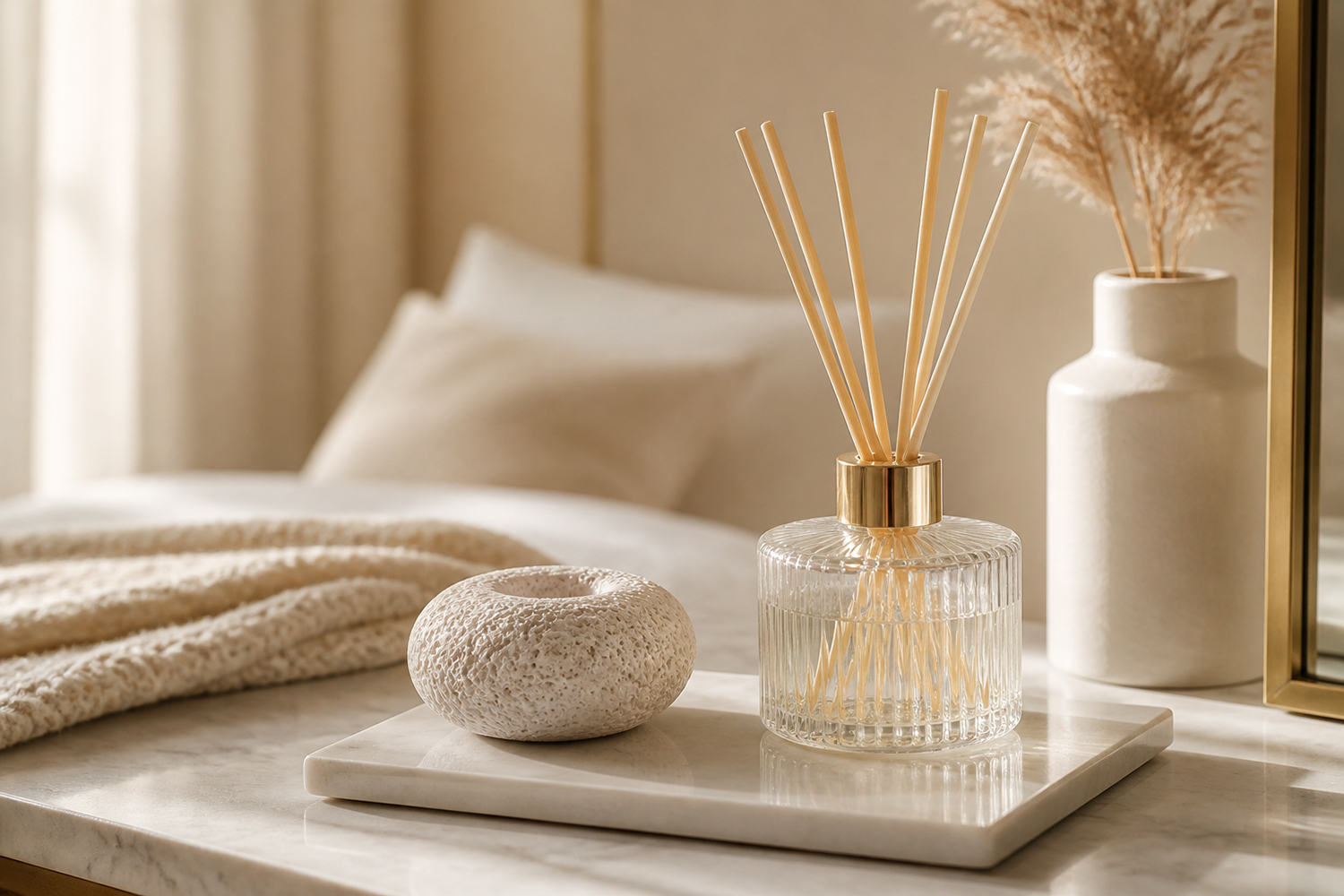
- Layer Your Scents: For a professional "hotel-vibe" atmosphere, use room sprays in conjunction with reed diffusers or aroma stones. The diffuser provides a constant base note, while the spray offers a "boost" of top-note freshness when needed.
- Less is More: Quality room sprays are highly concentrated. Start with 2–3 pumps for a medium-sized room. You can always add more, but an overpowering scent is difficult to dissipate quickly.
- Check the Ventilation: Scent requires moving air to travel. If a room is completely stagnant, the mist will simply fall to the floor. Cracking a window or using a ceiling fan helps circulate the fragrance molecules throughout the entire space.
Safety and Sustainability Considerations
As a professional in the fragrance industry, safety and environmental impact are paramount.
- Surface Sensitivity: Always perform a "patch test" on an inconspicuous area before spraying on expensive fabrics, silk, or polished wood. Some fragrance oils can cause staining or finish degradation.
- Pet and Child Safety: Keep bottles out of reach. Avoid spraying directly near pet bedding or bird cages, as certain essential oils (like tea tree or peppermint) can be sensitive for some animals.
- Flammability: Because many room sprays contain alcohol bases, keep them away from open flames, lit candles, or stovetops.
- Eco-Friendly Choices: For the environmentally conscious, look for non-aerosol triggers and formulas that use biodegradable, plant-based ingredients. Many brands now offer refillable glass bottles to reduce plastic waste.
Conclusion
Room sprays are more than just air fresheners; they are tools for "sensory branding" your home. By strategically placing your scent in high-traffic areas, utilizing soft furnishings as anchors, and following professional application techniques, you can transform your living environment into a bespoke olfactory experience. Whether you prefer a calming lavender for the bedroom or an energizing citrus for the office, the secret lies in the strategy of the spray.
What Does Fragrance Oil Do?
The Benefits of Using an Aroma Stone
Related Article