Why Does My Candle Tunnel? Causes, Fixes, and Prevention
Why Does My Candle Tunnel? Causes, Fixes, and Prevention
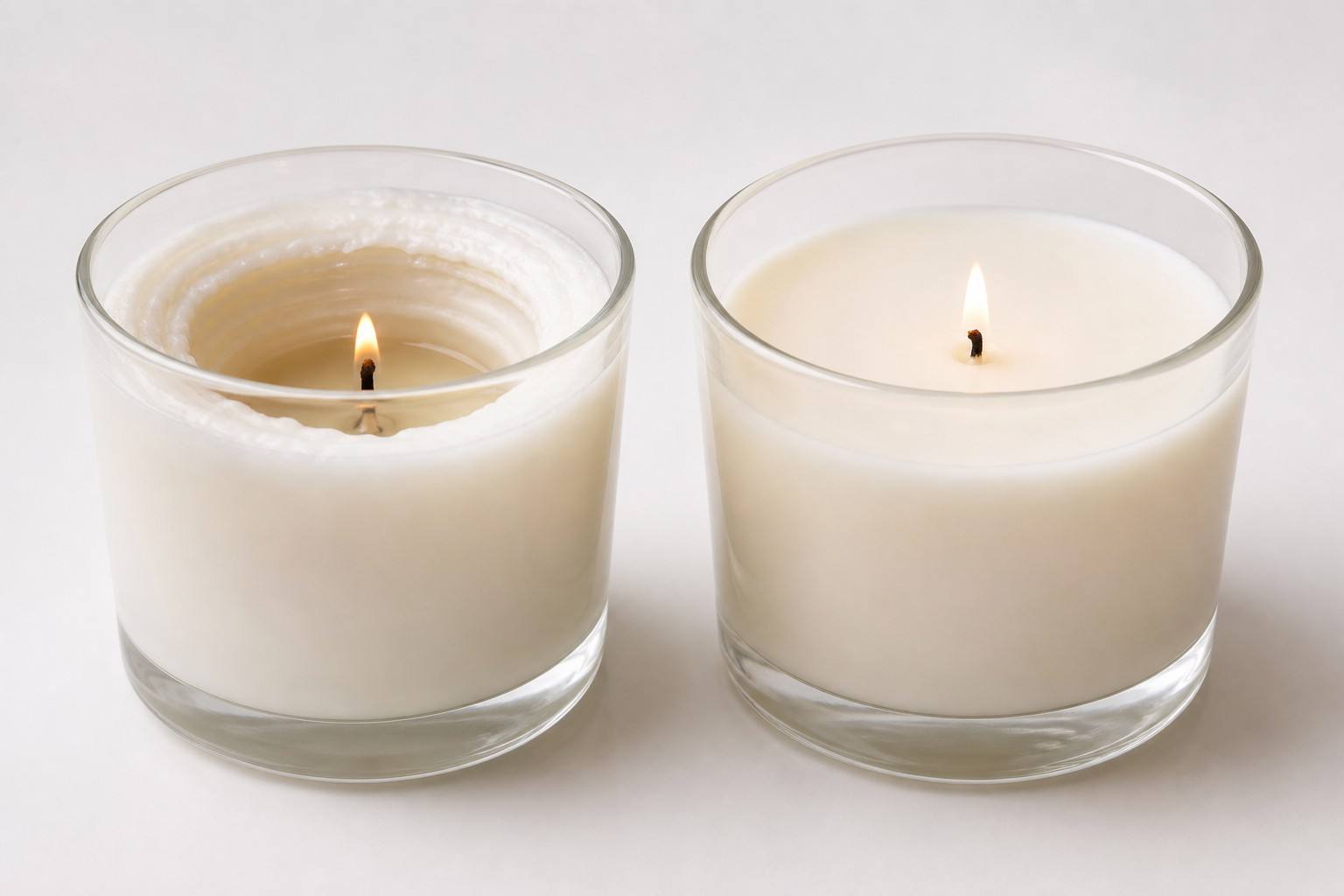
You light a candle expecting a smooth, even pool of fragrant wax. Instead, the flame burns straight down the center while a thick ring of hard wax remains around the edge. This common problem is known as candle tunneling.
A short first burn is often responsible, but it is not the only possible cause. An undersized wick, an unsuitable wax-and-wick combination, repeated short burns, or a draft can also produce an uneven melt pool. The good news is that mild tunneling can often be corrected, and the right candle care can prevent it from returning.
This guide explains what candle tunneling is, why it happens, how to fix candles that tunnel, and when it is safer to stop burning the candle.
What Is Candle Tunneling?
Candle tunneling happens when the wax immediately around the wick melts and burns away while the wax near the sides of the container stays solid. As the wick moves lower, it creates a narrow hollow through the center of the candle. This hollow is sometimes called a candle tunnel.
A melt pool should gradually widen as the candle burns. If the same narrow ring remains after several properly timed burns, the candle is likely tunneling rather than showing temporary wax hang-up. The tunnel can bury the wick, weaken scent performance, waste usable wax, and eventually make the flame too small to remain lit.
Why Is My Candle Tunneling?
There are several possible answers to the question, "Why is my candle tunneling?" The appearance of the wax and the behavior of the flame can help identify the most likely cause.
1. The First Burn Was Too Short
The first burn helps establish the width of the initial melt pool. If the candle is extinguished while only a small circle around the wick has melted, later burns may continue following that narrow path.
This effect is often described as wax "memory." In practical terms, previously melted wax can remelt more readily than the harder wax left around it. A short first burn may therefore create an incomplete melt pool that contributes to candle tunneling, repeated center burning, and wasted wax.
However, the popular rule of burning a candle for one hour per inch of diameter is only a general guideline. Wax blend, wick type, fragrance load, vessel shape, and the candle maker's instructions should also determine a safe burn time. Never exceed the brand's recommended maximum burn period just to force the wax to reach the edge.
2. The Wick Is Too Small
An undersized wick may not create enough heat to melt wax across the full diameter of the container. In that case, even a long first burn may leave a persistent wall of solid wax.
A very small flame and a narrow melt pool after an appropriate burn time suggest a wick-sizing problem. Trimming an already weak wick too short may make it worse, and changing your burn routine may not fully correct an undersized wick.
3. The Wax, Fragrance, and Wick Are Not Properly Balanced
Every candle is a system. Wax hardness, melting behavior, fragrance concentration, dye, vessel diameter, and wick construction all affect the amount of heat needed to form an even melt pool.
An unsuitable wax blend or wick size can contribute to candle tunneling. This is why two candles with similar containers may burn differently. Soy candle tunneling, for example, should not automatically be blamed on soy wax itself; the complete formula and wick choice matter more than a single ingredient.
4. Repeated Short Burns or Drafts Disrupt the Melt Pool
Repeated short burns melt the center while giving the outer wax too little heat. Airflow can also pull the flame to one side, so keep candles away from windows, fans, and air-conditioning vents.
How to Diagnose the Cause
Before trying a repair, observe the candle during a normal burn.
| What You See | Likely Cause | What to Do |
|---|---|---|
| A narrow melt pool after a short burn | Insufficient burn time | Follow the maker's recommended burn time |
| A tiny flame and narrow pool after adequate time | Wick may be too small or too short | Stop trimming; contact the brand if the issue continues |
| Wax melts more on one side | Draft or uneven surface | Move the candle to a level, draft-free location |
| The wick is deeply buried | Advanced tunneling | Use only a low-risk repair or stop burning |
| The container becomes unusually hot or damaged | Unsafe burning condition | Extinguish the candle and discontinue use |
How to Fix Candles That Tunnel
The safest approach depends on how deep the tunnel is. A shallow wax ring is easier to correct than a deep tunnel with a buried wick.
Use the Aluminum Foil Method for Mild Tunneling
The aluminum foil method redirects some of the candle's heat toward the wax at the sides.
- Extinguish the candle and let it cool before handling it.
- Make sure the wick is upright and not buried in wax.
- Wrap aluminum foil around the top edge of the container.
- Leave a generous opening above the flame so air can circulate.
- Relight the candle and monitor it continuously until the upper wax surface becomes more even.
- Extinguish the candle within the manufacturer's maximum burn time, then let it cool completely.
Never leave a foil-covered candle unattended. The container and foil may become very hot. If the flame grows, smokes, flickers heavily, or appears starved of oxygen, extinguish it immediately.
You can also compare three practical methods for fixing candle tunneling, although techniques involving high heat or wick replacement are not appropriate for every consumer or container.
Level Minor Surface Wax Carefully
If the tunnel is shallow, gentle external heat may soften the raised wax around the edge. A hair dryer on a low setting can be used cautiously from a safe distance. Protect the surrounding surface, avoid blowing liquid wax, and keep heat away from labels, decorations, and cracked glass.
Do not microwave a candle, because many wicks contain metal tabs and containers may not be microwave-safe. Do not place a finished candle in an oven unless the manufacturer expressly approves it.
Know When to Stop
Stop burning if the wick is deeply buried, the flame repeatedly goes out, or the container is cracked or unusually hot. Removing large amounts of wax or replacing the wick can change heat transfer; when in doubt, contact the candle brand.
How to Prevent Candle Tunneling
These habits support a cleaner, more even burn:
- Allow enough time for the first melt pool. Follow the candle maker's instructions rather than a universal formula.
- Avoid very short burn sessions. Repeatedly burning only the center can encourage a candle tunnel to develop.
- Trim the wick as directed. Many container candles perform well with a wick near 1/4 inch, but the product instructions should come first.
- Keep the candle away from drafts. Stable airflow helps the melt pool develop evenly.
- Use a level, heat-resistant surface. A tilted candle can melt unevenly and overheat one side of the container.
- Respect the maximum burn time. A full melt pool is not worth overheating the vessel or allowing excessive soot.
Candle Tunneling FAQs
Can a Tunneled Candle Be Saved?
Mild candle tunneling can often be corrected with the aluminum foil method or careful surface leveling. A deep tunnel with a buried wick may not be safe or practical to repair at home.
Does Tunneling Mean a Candle Is Poor Quality?
Not necessarily. User habits, drafts, and short burns can affect a well-made candle. However, persistent tunneling after correct use may indicate that the wick, wax, fragrance, and container were not properly balanced.
Why Does My Soy Candle Tunnel?
Soy candle tunneling can result from a short first burn, an undersized wick, repeated short burns, or a formula that does not produce enough heat for the vessel. Soy wax alone is not proof of the cause.
Should the Wax Always Reach the Edge on the First Burn?
The goal is a broad, balanced melt pool, but forcing the wax to reach the edge can lead to an excessively long or unsafe burn. Follow the manufacturer's instructions and observe whether the melt pool widens during later burns.
Final Thoughts
Candle tunneling begins when heat remains concentrated around the wick instead of forming a balanced melt pool. A short first burn is a frequent cause, but wick size, wax formulation, fragrance load, drafts, and repeated short burns can also contribute.
If the tunnel is shallow, a carefully monitored foil method may help level the wax. If the wick is buried, the flame is unstable, or the container shows signs of overheating, stop burning the candle. Thoughtful candle care, realistic burn times, and attention to the flame are the best ways to enjoy an even burn without compromising safety.
How to Make Aroma Stones DIY
Is Your Room Spray Safe for Cats? Best Non-Toxic Alternatives for Pet Owners
Related Article