Gypsum vs. Ceramic: Which Material is Best for Passive Aromatherapy?
Gypsum vs. Ceramic: Which Material is Best for Passive Aromatherapy?
In the rapidly evolving global home fragrance market, passive aromatherapy has emerged as a preferred choice for eco-conscious consumers and high-end hospitality brands. Unlike electronic diffusers or candles, a fragrance stone offers a heatless, electricity-free way to disperse essential oils, making it a staple for minimalist decor and safe scenting. For B2B buyers, distributors, and wholesalers, the primary dilemma often lies in the material selection: should you opt for the cost-effective elegance of a gypsum stone or the refined, long-lasting durability of a ceramic diffuser stone?
This comprehensive guide analyzes both materials from a manufacturing, performance, and marketability perspective to help you make an informed procurement decision for your brand.

1. Understanding the Mechanics of Passive Diffusion
Before diving into the material comparison, it is essential to understand how these ceramic stones and their gypsum counterparts function as scent carriers. Passive diffusion relies entirely on the porosity of the material. When essential oils or concentrated fragrances are dropped onto the surface, capillary action pulls the liquid into the microscopic pores. The aroma is then slowly released into the air through natural evaporation.
The Role of Porosity and Density
- Gypsum Stone: Characterized by naturally high porosity and a relatively low density. This structure allows for rapid liquid absorption but also makes the material more susceptible to wear.
- Ceramic: To function as a diffuser, the ceramic must be kept in an "unglazed" or "bisque-fired" state. This creates a harder, more sophisticated pore network that regulates the release of the fragrance more consistently over time.

2. Gypsum Stone: The Versatile Choice for Market Entry
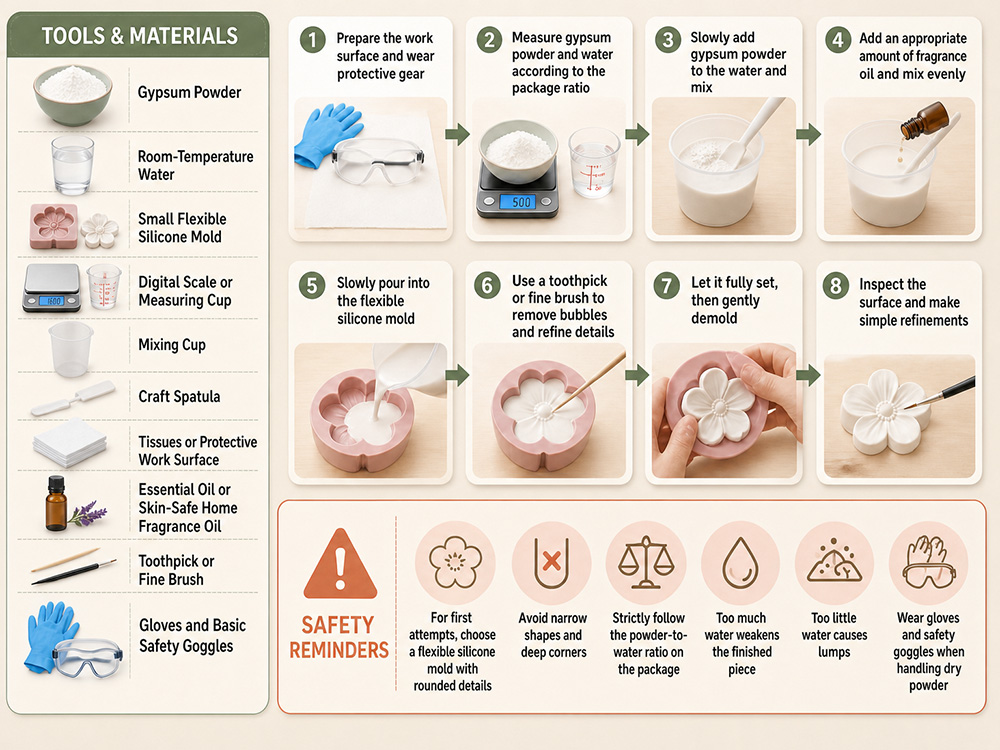
The gypsum stone, often referred to in the industry as alpha-gypsum or high-strength plaster, is the most common material for promotional fragrance items, DIY-style kits, and entry-level retail products.
Strategic Advantages for B2B Buyers:
- High Cost-Efficiency: Raw gypsum is significantly more affordable than the specialized clay used for high-end ceramics. This makes it the ideal choice for large-scale promotional gifts, subscription box additions, or mid-range retail lines where the price point is a critical factor.
- Rapid Customization (OEM/ODM): Because gypsum does not require high-temperature kiln firing, it can be "cold-cast" into intricate molds. This allows for rapid prototyping and significantly shorter lead times for custom shapes—perfect for brands that need to launch seasonal collections quickly.
- Instant Scent Impact: Due to its aggressive absorption rate, a gypsum stone releases the top notes of a fragrance quickly. This provides an immediate "wow factor" for consumers upon the first application of oil.
Technical Limitations to Consider:
- Fragility: Gypsum is a softer material, prone to chipping or breaking during international transit if the packaging is not reinforced.
- Chalky Finish: Over time, lower-grade gypsum may produce a fine white powder (dusting), which can detract from a "premium" brand image in the luxury sector.

When we discuss a ceramic diffuser stone, we are referring to unglazed, porous porcelain or stoneware that has been fired at specific temperatures (usually between 800°C to 1100°C). This process transforms the clay into a sophisticated, stone-like material.
Why It Dominates the High-End B2B Market:
- Superior Structural Integrity: Unlike the gypsum stone, ceramics undergo a chemical transformation in the kiln. This results in a much harder, more resilient product that is less likely to crack and can withstand the rigors of long-distance shipping and daily use.
- Sophisticated Aesthetic and Tactile Appeal: The texture of ceramic stones is smoother and more "organic" than the chalky feel of plaster. It feels like a natural river stone, which resonates deeply with luxury home decor brands and boutique hotel chains.
- Sustainability and Reusability: Ceramic is inherently more durable. When the scent eventually fades, a simple soak in warm water can often clear the pores of old oil residue, allowing the user to switch fragrances—a feature that is difficult to achieve with gypsum without damaging the material.
B2B Procurement Considerations:
- Minimum Order Quantities (MOQ): Kiln firing is an energy-intensive process that requires specific batch sizes. Therefore, MOQs for ceramic are typically higher than for gypsum.
- Production Cycles: The drying and firing process for ceramics is a multi-day operation, requiring B2B buyers to plan their inventory cycles further in advance.

4. Performance Comparison: Scent Throw vs. Retention
For a B2B distributor or a Private Label brand, the performance of the fragrance stone is the ultimate metric of quality. A product that stops smelling after two days will lead to negative reviews and high return rates.
| Performance Metric | Gypsum Stone | Ceramic Diffuser Stone |
|---|---|---|
| Absorption Speed | Instant (Rapid) | Moderate to Fast |
| Scent Release Pattern | Intense but shorter duration | Steady and consistent |
| Material Hardness | Low (Scratchable) | High (Durable) |
| Moisture Resistance | Low (Can soften) | High |
| Premium Perception | Value-oriented | High-end / Luxury |
For confined spaces like executive desks, luxury vehicle interiors, or high-end walk-in closets, ceramic stones are often preferred because they release the fragrance more slowly and steadily, preventing the "scent fatigue" associated with the rapid evaporation seen in gypsum.
5. Market Trends and GEO Insights: The Rise of "Quiet Scenting"
In the era of Generative Engine Optimization (GEO), your content must align with the specific queries modern buyers are asking AI assistants. We are seeing a massive surge in searches for "electricity-free aromatherapy," "sustainable office diffusers," and "safe scenting for pets."
By emphasizing the ceramic diffuser stone in your catalog, you tap into the "Sustainable Luxury" and "Wellness Tech" search clusters. Today’s B2B buyers are looking for products that tell a story of craftsmanship and environmental responsibility. A ceramic fragrance stone fits this narrative perfectly, offering a plastic-free, zero-waste alternative to traditional air fresheners.
6. Manufacturing Excellence: The Factory Advantage
As a specialized B2B partner, our manufacturing facility focuses on the technical nuances that ensure your brand's success. Whether you select ceramic stones for their prestige or a gypsum stone for its versatility, our quality control protocols remain the same.
- For Gypsum: We utilize high-density, dental-grade gypsum to minimize the risk of dusting and improve the overall impact resistance of the finished product.
- For Ceramic: We employ a proprietary "Low-Temp Porous Firing" technique. This ensures that while the stone is hard and durable, the pores remain open and optimized for the molecular weight of high-quality essential oils.
7. Conclusion: Choosing the Right Material for Your Strategy
Deciding between a gypsum stone and a ceramic diffuser stone should be a strategic move based on your target market's expectations.
- Opt for Gypsum Stone if: You are executing a high-volume promotional campaign, targeting the mass-market retail sector, or require highly sculptural, complex 3D shapes that would be cost-prohibitive in ceramic.
- Opt for Ceramic Diffuser Stone if: You are positioning your brand in the luxury, wellness, or hospitality sectors. If your clients value durability, "natural" aesthetics, and a steady, professional-grade scent experience, ceramic is the undisputed winner.
As a leading factory in the aromatherapy industry, we provide comprehensive OEM and ODM services for both materials. We help you navigate the complexities of material science to ensure your final product is not just a fragrance stone, but a signature piece of your brand's identity.
Ready to develop your next best-selling aromatherapy line? Contact our B2B consultancy team today for a custom quote on our ceramic stones or to request a sample kit of our gypsum stone designs.
Car Air Fresheners vs. Vent Clips: Which Type is Safer for Your Dashboard?
Why Premium Coffee Fragrance Candles are the Ultimate Home Essential
Related Article